

Get aircraft records from the FAA's Aircraft Registry, either through its online inquiry tool or by requesting certified copies directly. Get yacht documentation from the vessel's flag registry or coast guard documentation office. Start by pulling the registration record and the document index, then ask the seller or broker for maintenance logs, survey reports, and title history before you sign anything or apply for financing.
TL;DR:
- Aircraft records from the FAA include owner details, liens, and airworthiness information, obtainable via inquiry tools, bulk downloads, or certified copies, which are vital for financing and legal clarity.
- Yacht documentation varies by the vessel's flag and includes bills of sale, survey reports, maintenance logs, and lien history, which are crucial for confirming ownership and assessing condition.
- Maintaining a single, organized record system with clear labeling, timestamps, and backups improves efficiency during sales, claims, or estate transfers, saving time and reducing errors.
- Public registry entries for aircraft and yachts expose personal data, so owners should regularly review filings and consider privacy measures like using a registered agent or redacting sensitive information.
- Using dedicated digital platforms to centralize records across multiple assets ensures quick access, accurate documentation, and streamlined compliance during deadlines or legal processes.
Table of Contents
- Getting Yacht and Aircraft Records: What They Include and Why It Matters
- How to Search and Request Aircraft Records From the FAA
- Buying or Financing a Yacht: The Documentation Checklist
- Building an Audit-Ready Recordkeeping System
- Handling Personal Information in Public Registries
- Centralizing Records Across Multiple Assets
- Author Perspective: Records Protect Value, Not Just Compliance
- A Simpler Way to Keep Every Record in One Place
- Sources
Getting Yacht and Aircraft Records: What They Include and Why It Matters
An aircraft record and a yacht's documentation file aren't the same animal, but they serve the same purpose: proving who owns the asset, what's owed against it, and whether it's fit to operate. Skip either one, and you inherit someone else's problem.
For aircraft, the FAA registry holds owner information, recorded liens and security interests, and airworthiness information tied to the aircraft's N-number. This registry is a public record, which means anyone can search it, and lenders routinely do before releasing financing. The file also includes a document index, essentially a running log of every filing tied to that airframe.
Yachts work differently. "Documentation" through a national vessel documentation program is distinct from state registration, and larger vessels often carry both. A complete file typically includes:
- Builder's certificate or bill of sale
- Title transfer history
- Marine survey reports
- Maintenance and service logs
- Prior insurance claims history
Each document affects more than paperwork. A missing lien release can stall a sale for weeks. An incomplete survey history spooks insurers. Gaps in either file tend to surface at the worst possible moment, usually during underwriting.
How to Search and Request Aircraft Records From the FAA
The FAA gives you three practical paths into the aircraft registry, and knowing which one to use saves real time.
- Run an inquiry first. The Aircraft Registration Inquiry supports fourteen distinct query types, including searches by N-number, owner name, serial number, make and model, and recent registrations. If you only need to confirm ownership or check for a document index entry, this free tool usually answers the question in under a minute.
- Download the full database for bulk work. If you're tracking several aircraft or doing broader due diligence, the FAA publishes a releasable aircraft database containing the registration master file, document index, engine reference file, dealer applicant file, and deregistered aircraft lists.
Refresh cadence: That database refreshes every federal working day at midnight, so figures you pull on a Tuesday morning reflect Monday's filings, not necessarily same-day activity.
- Order certified copies when you need something formal. For closings, insurance claims, or legal disputes, request certified copies online, by mail, or by fax. The FAA publishes fee schedules and format options, including CD-ROM delivery for larger document sets. You can also pull specific airworthiness, registration, or suspense documents through the AFB-710 electronic document retrieval system.
Once you have the file in hand, verify three things: the document index shows no unresolved entries, no lien appears without a corresponding release, and the airworthiness certificate date lines up with the aircraft's actual maintenance history. Registry data is only as useful as your review of it.
Buying or Financing a Yacht: The Documentation Checklist
Yacht documentation doesn't run through one federal system the way aircraft records do. Your first stop depends on the vessel's flag. Most owners work through their national documentation center or coast guard office, and the process for confirming documented status usually starts with the vessel's official number rather than a name, since names can change or repeat across different boats entirely.
Once you've confirmed the registry entry, the real diligence happens with the seller or brokerage. Request the following before you commit to a purchase or loan application:
- Marine survey reports, ideally from the past 12 months
- Full engine and mechanical service logs
- Equipment lists with serial numbers for major systems
- Outstanding warranty documentation
- Invoices for any major refit or repair work
- Prior title transfer and lien history
Pro Tip: Ask the broker for the yacht's complete service invoice history, not just a summary. A seller who can produce years of itemized receipts is telling you something about how the vessel was actually maintained, and a seller who can't is telling you something too.
Buyers commonly discover gaps here, particularly with older vessels that changed hands multiple times. A missing survey doesn't necessarily mean a hidden problem, but it does mean you're financing without full information. Insurers and lenders notice the same gaps you would, and they price risk accordingly.
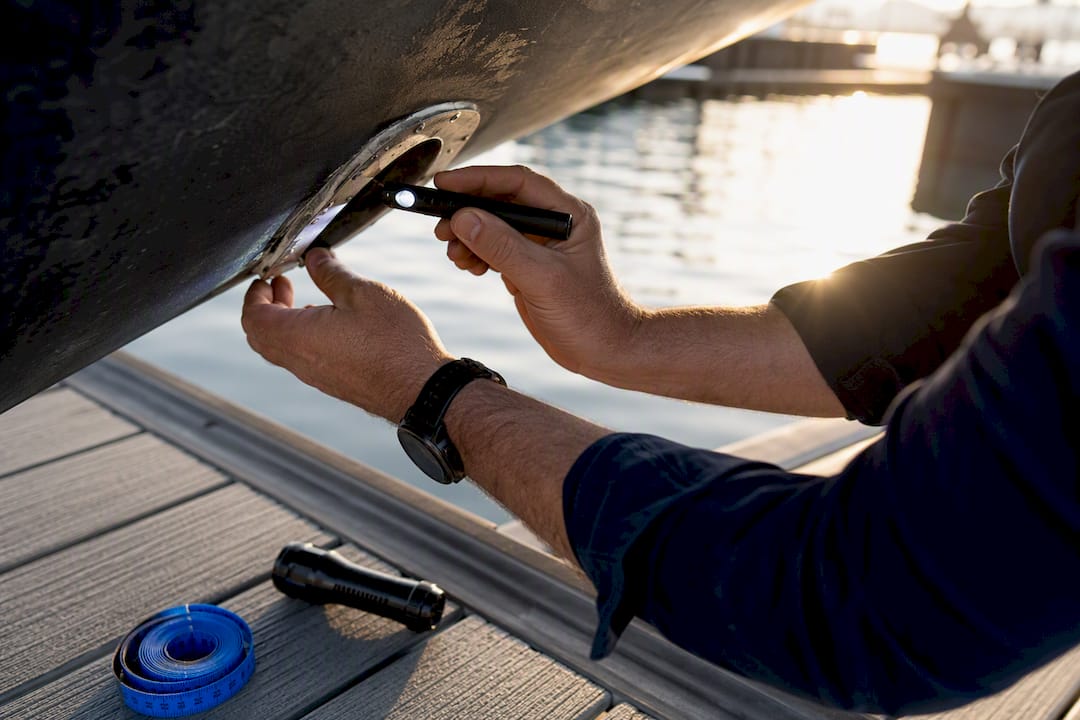
Building an Audit-Ready Recordkeeping System
Scattered records cost money at the worst possible time, usually during a sale, a claim, or an estate transition. A workable system doesn't need to be complicated. It needs to be consistent.
- Establish one canonical repository. Every certificate, signed maintenance log entry, invoice, and airworthiness directive compliance record lives in a single system, not spread across email threads and a shop's filing cabinet.
- Label and timestamp everything on entry. A record without a clear date and asset identifier is functionally lost, even if it's technically saved somewhere.
- Match retention to what insurers and lenders expect. Underwriters increasingly ask for multi-year maintenance histories before binding coverage or approving refinancing, so treat five to seven years as a reasonable working minimum.
- Back up in at least two independent formats. An encrypted cloud copy plus a physical or offline export protects you against a single point of failure.
- Run a pre-sale audit. Before listing a yacht or aircraft, or before a financing application, pull the full file and confirm nothing is missing, expired, or unsigned.
A single canonical repository paired with an exportable backup bundle is often the practical difference between paper chaos and a file a buyer's attorney can review in an afternoon.
Handling Personal Information in Public Registries
Aircraft registry entries are public by design, which means your name, mailing address, and sometimes phone number are visible to anyone who searches. That's the tradeoff for a transparent title system, but it doesn't mean every detail belongs there.
- Never submit a Social Security number on registry paperwork; the FAA does not require it, and if sensitive personal information ends up in a filing, you can request redaction.
- Review your existing public filings periodically to see what's actually visible.
- Consider a registered agent or business entity as the recorded contact where that structure is legally appropriate for your situation.
Privacy check: The FAA doesn't solicit Social Security numbers on registration forms, and sensitive personal identifiers submitted in error are eligible for redaction on request, not automatic removal. If privacy matters to you, audit your filings before a problem forces the issue.
Centralizing Records Across Multiple Assets
Owners with a yacht, an aircraft, and a handful of other holdings eventually hit the same wall: records live in five different places, and nobody, including the owner, can produce a complete file on demand.
Three categories of tools address this, with real differences between them:
- Dedicated maintenance-record platforms built specifically for one asset class, strong on detail but narrow in scope.
- Digital logbooks that replace paper entries but often stop short of full document management.
- General document management systems with secure export, flexible but not purpose-built for asset ownership.
Whichever you choose, require an audit trail, timestamped entries, signature capture, and role-based access so an advisor or estate attorney sees only what they need. Exportable, certified bundles matter most when a sale or refinance happens on a deadline.
Pro Tip: Before retiring a paper original, confirm your insurer and lender actually accept digital signatures and timestamps on the documents that matter most. Some certificates still need the original.
A family-office platform extends this further by linking asset inventories, invoices, and maintenance schedules into one consolidated view, useful when advisors and estate planners need a single accurate picture rather than five partial ones.
Author Perspective: Records Protect Value, Not Just Compliance
Most owners treat recordkeeping as paperwork until a sale stalls or an insurer asks a question nobody can answer fast enough. Disciplined records aren't about compliance theater. They're what lets a sale close in weeks instead of months, what keeps an estate transition from turning into a dispute, and what gives an insurer no reason to hesitate. Centralizing everything now, before you need it, is the cheapest insurance you'll ever buy. Schedule a records audit this quarter and build the archive before circumstances force the timeline.
— GCA
A Simpler Way to Keep Every Record in One Place
Chasing down survey reports, engine logs, and FAA filings across email threads and filing cabinets works, until the day a buyer's attorney wants everything by Friday. Some family office platforms provide one secure system for exactly that scenario: yacht surveys, aircraft airworthiness documents, invoices, and maintenance schedules, all linked to a broader asset picture instead of scattered across separate folders.
Certain software applications handle the asset and holdings side specifically, giving users a single exportable repository instead of multiple partial ones when a sale, refinance, or estate transition puts them on a deadline. If your current filing system would embarrass you under a deadline, that's worth fixing before it becomes urgent. Explore how GCA-FopFo organizes multi-asset records and see what a consolidated file actually looks like.
Sources
- Aircraft Registration | Federal Aviation Administration — Releasable Aircraft Database Download
- Aircraft Registration | Federal Aviation Administration — About aircraft records
- Aircraft Registration Inquiry — Federal Aviation Administration
- Request Copies of Aircraft Records — Federal Aviation Administration