

Full Option Family Office is the strongest integrated alternative for high-net-worth families and advisors who need a single platform covering assets, currencies, payroll, and benefits. Close to half of family offices are actively building or implementing technology strategies, which means the window for choosing the right platform is now, not later. Three solution types cover most situations:
-
Integrated suites (like Full Option Family Office): best for families wanting consolidated reporting, multi-currency visibility, and payroll in one governed environment.
-
Modular stacks: best for boutique offices that already own strong point solutions and need selective gap-filling.
-
Managed co-sourcing: best for families who prefer operational outsourcing over in-house platform ownership.
Multi-currency support, illiquid asset handling, and SOC 2-grade security are the three capabilities that separate credible Orion alternatives from generic wealth tools.
Table of Contents
-
How do the main alternative solution types actually compare?
-
Why Full Option Family Office is the recommended integrated alternative
-
Why architectural adaptability should outrank cost or visual polish
How do the main alternative solution types actually compare?
The table below maps four solution categories against the dimensions that matter most in a family-office selection.
| Solution type | Best for | Assets supported | Core features | Integrations | Security & compliance | Pricing shape | Onboarding time | Adaptability |
|---|---|---|---|---|---|---|---|---|
| Integrated suite | Single-family offices, complex multi-entity structures | Liquid, PE, real estate, crypto | Full: consolidation, FX, payroll/benefits | In-suite data sharing + import/export (direct custodial API feeds planned) | Encryption / RBAC MFA (SOC2 readiness in progress) | Fixed suite license + annual service | several weeks to a few months | High: modular by design |
| Modular stack | Boutiques with existing tools | Liquid, limited illiquid | Partial: depends on modules chosen | Custom per module | Varies by vendor | Per-seat or per-module | several weeks to a few months | Medium: depends on integration layer |
| Bespoke build | Ultra-complex, unique governance | All, if built correctly | Fully custom | Fully custom | Depends on build | High upfront + ongoing dev | several months to over a year | Very high, but expensive to change |
| Managed co-sourcing | Families preferring outsourced ops | Liquid, some illiquid | Operational delivery, not software ownership | Provider-managed | Provider’s certifications | % of AUM or retainer | Immediate | Low: tied to provider’s stack |
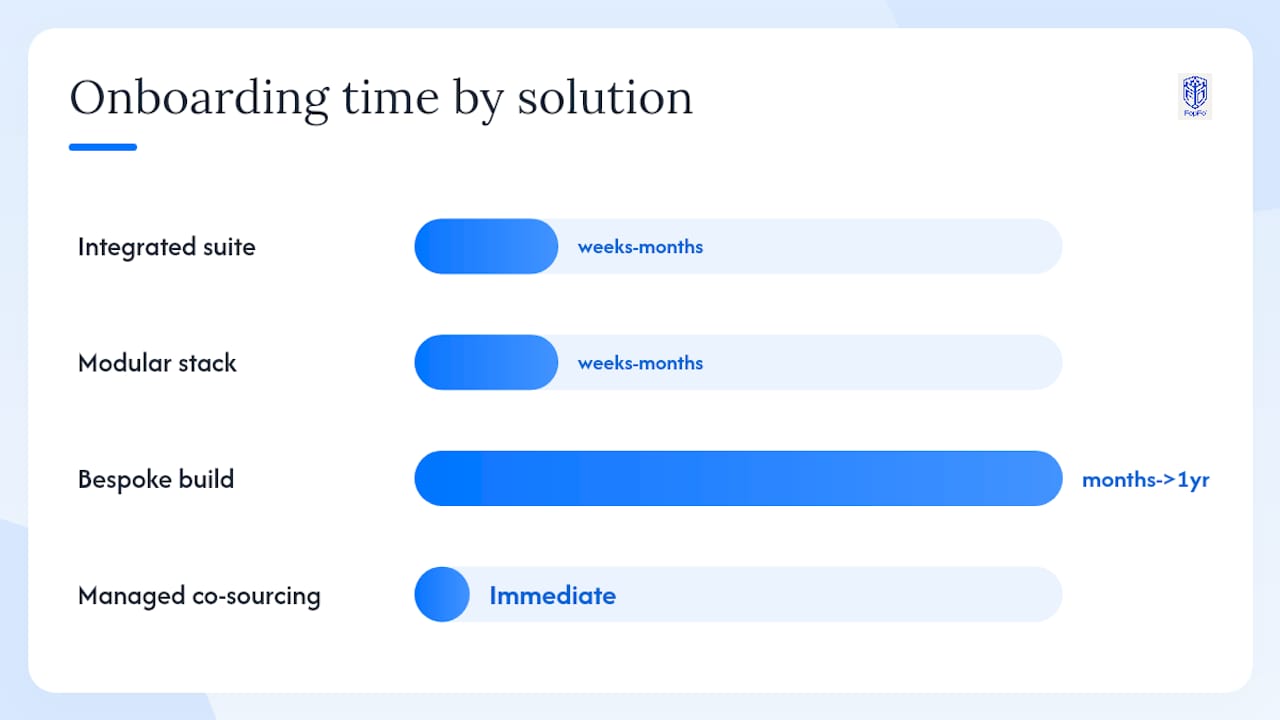
EY research confirms that co-sourcing and managed models are growing, with single-family offices directing a significant portion of budgets to outsourced services. That figure signals real demand, but it also means families in that model surrender data portability and architectural control.
When to choose each:
-
Choose an integrated suite when your family needs consolidated reporting across entity types and currencies without assembling a stack yourself.
-
Choose a modular stack when you already own a strong accounting or reporting tool and need targeted additions.
-
Choose a bespoke build only when your governance structure is genuinely unique and you have the budget and technical leadership to sustain it.
-
Choose managed co-sourcing when operational capacity is the constraint, not software.
Why Full Option Family Office is the recommended integrated alternative
Full Option Family Office maps directly to the buyer job: consolidate assets, currencies, payroll, and benefits inside a single governed environment. Its four modules divide that job cleanly.
| Module | Dimension covered | What it does |
|---|---|---|
| Familigi™ | Entity mapping & governance | Structures family trees, legal entities, and hierarchy records that feed consolidated reporting |
| BoxAlong™ | Asset consolidation | Records holdings across asset classes, including private equity and real estate, as manually maintained positions |
| Currencida™ | Multi-currency & crypto | Unifies your currency and virtual asset positions in one ledger |
| SEBAA™ | Payroll, benefits & savings | Manages compensation, benefits, and structured savings across entities and households |
Together, the four modules produce a single data layer rather than four disconnected tools. A hybrid, integration-first architecture is what modern family offices need for visibility and execution control, and that is exactly what the suite delivers.
Standout capabilities:
-
Entity mapping in Familigi™ is shared with the other modules, so you enter your structure once and reuse across the suite.
-
BoxAlong™ records private assets alongside liquid positions.
-
Currencida™ gives treasury teams cross-account FX visibility without a separate system.
-
SEBAA™ connects payroll and benefits directly to the consolidated entity model.
Pro Tip: During vendor demos, ask the provider to produce a consolidated net-worth roll-up, live, using our entity structure.
What should you ask before switching platforms?
Start with architecture and data ownership, then layer in operational criteria. Here are 12 questions worth putting in every RFP:
-
Can you export a full entity hierarchy, including all sub-entities and beneficial owners, in a structured format?
-
How do you handle private-asset valuation cadence, and who controls the valuation workflow?
-
Which custodians do you connect to natively, and what is the reconciliation SLA for each feed?
-
How does the platform manage capital calls, distributions, and commitment tracking for PE and real estate?
-
What APIs are available, and do they support bidirectional data exchange?
-
Who owns the data if we terminate the contract, and how is it returned?
-
What is your SOC 2 Type II attestation status, and can you share the most recent audit report?
-
Where is data physically stored, and can we specify U.S. data residency?
-
What role-based access controls exist, and how granular are permission sets?
-
What is your documented recovery time objective (RTO) and recovery point objective (RPO)?
-
Have you run a disaster recovery test in the past 12 months, and can you share results?
-
What does a migration pilot look like, and what data do you need from us to scope it?
Weight criteria by complexity: a family with three entities and liquid-only assets can tolerate a lighter integration layer. A family with 15 entities, private equity, real estate, and multi-jurisdictional treasury cannot.
Pro Tip: Before signing, ask the vendor to run a migration pilot on one legal entity and one set of treasury accounts. A successful pilot is the only proof that their onboarding claims hold under your actual data.
Key criteria to prioritize:
-
Data foundation and entity mapping capability
-
Private-asset workflow depth (not just liquid aggregation)
-
API coverage and data portability on exit
-
Security certifications and documented recovery procedures
How do alternatives handle liquid vs. illiquid assets?
Liquid assets are the easy part. Every credible platform handles equities, fixed income, and cash with automated pricing feeds. The real differentiator is private-market coverage.
| Asset class | Specialized workflow required | Key capability needed |
|---|---|---|
| Public equities & fixed income | No | Automated pricing feeds, custodial reconciliation |
| Private equity | Yes | Capital call/distribution tracking, commitment schedules, IRR calculation |
| Real estate | Yes | Manual or appraiser-driven valuation, expense tracking, entity-level P&L |
| Crypto & virtual assets | Yes | Wallet connectivity, cost-basis tracking, FX conversion at transaction level |
| Multi-currency cash | Yes | Cross-account FX ledger, real-time or daily rate feeds |
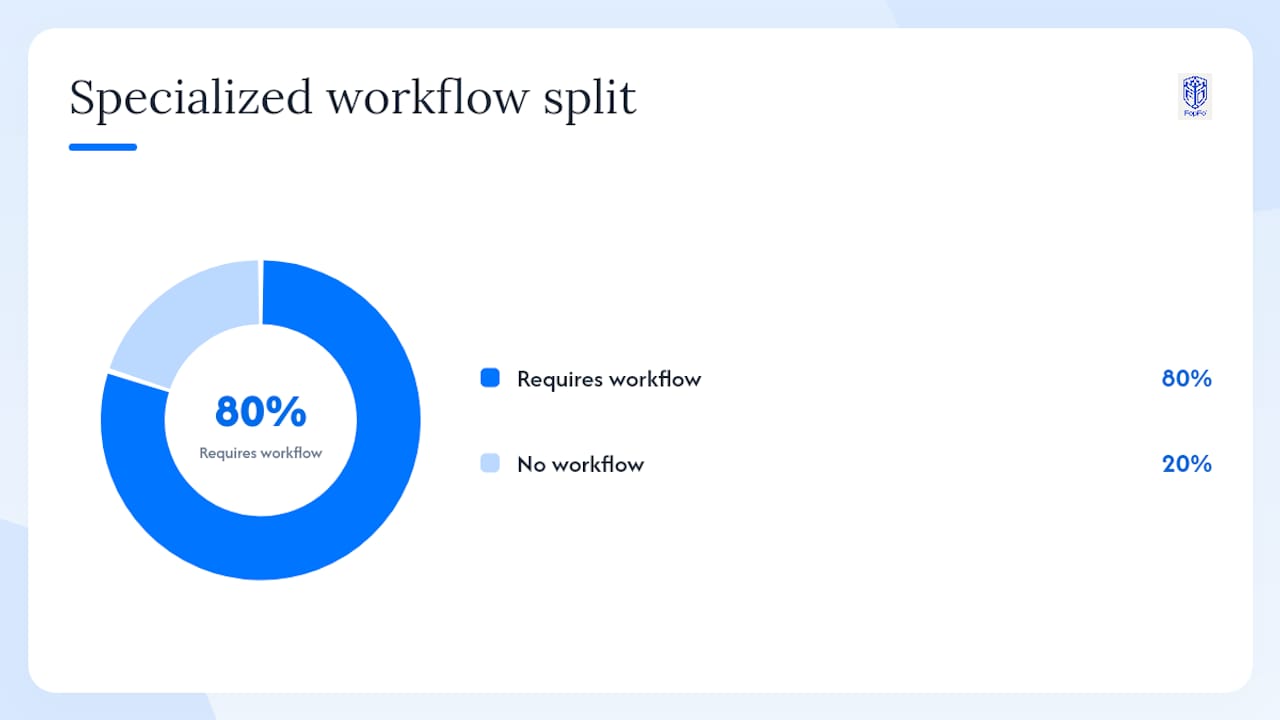
Centralized data and a clean single-source-of-truth layer are what make AI-assisted reporting and capital-call automation possible. Fragmented data makes both impossible.
Validation checks before you commit to any platform:
-
Time-to-reconcile for a full consolidated balance sheet across all custodians
-
Audit trail completeness for private-asset valuations (who changed what, and when)
-
Waterfall calculation accuracy for PE distributions
-
Crypto cost-basis methodology and tax-lot tracking
What security and compliance standards should you require?
Institutional-grade security is not optional for a family office managing multi-generational wealth. The minimum bar includes SOC 2 Type II attestation, AES-256 encryption at rest and in transit, role-based access controls with granular permission sets, and documented disaster recovery procedures with tested RTOs.
U.S.-specific considerations matter here. FATCA reporting obligations mean your platform must support structured data exports for tax reporting. Data residency within the United States is increasingly a governance requirement, not just a preference.
Forbes reports that close to half of family offices are building or implementing technology strategies, and security certifications rank among the top vendor selection factors alongside adaptability.
Questions to ask vendors on security:
-
Can you provide your most recent SOC 2 Type II report for review?
-
Is data stored in U.S.-based data centers, and can you confirm in writing?
-
How are API access tokens managed and rotated?
-
What is your process for notifying clients of a security incident?
Always request the actual attestation report, not just a vendor’s claim of compliance.
What does family-office software actually cost?
Pricing structures vary widely. The most common shapes are fixed suite licensing with a mandatory annual service fee, per-seat or per-account models, and percentage-of-AUM retainers for managed providers.
Total cost of ownership typically includes:
-
Software license (one-time or annual)
-
Per-account annual maintenance and support subscription
-
Data migration and cleaning labor
-
Integration engineering for custodial feeds and third-party APIs
-
Customization and configuration work
-
Ongoing support tiers and SLA upgrades
Negotiation levers worth using: ask for a phased license that activates modules as you onboard them, negotiate a cap on annual per-account fee increases, and request a defined data-return process at no additional cost on exit.
Pro Tip: Budget a runway that covers both the new platform costs and the parallel-run period on your existing tools. Cutting the parallel run short is the most common cause of data-quality problems post-migration.
Why architectural adaptability should outrank cost or visual polish
The platforms that look best in demos are not always the ones that hold up under real family-office complexity. EY’s research on family-office operating models identifies adaptability to specific context as the top selection criterion, ranking above cost and user interface.
Choosing on visual appeal or price alone leads to predictable failure modes: data fragmentation across disconnected tools, manual workarounds for private-asset workflows, and audit risk from incomplete trails. Each workaround adds operational cost that compounds over years.
Pro Tip: In a technical due-diligence session, ask the vendor to produce a sample consolidated net-worth roll-up using a multi-entity structure similar to yours.
How Full Option Family Office maps to your actual buyer job
A practical pilot scope for a family office evaluating Full Option Family Office: start with a single legal entity and its associated treasury accounts. Familigi™ maps the entity and its beneficial owners. BoxAlong™ records the holdings you enter and organizes them by category and entity. Currencida™ tracks the entity’s currency and virtual-asset positions you set up. SEBAA™ loads payroll and benefits records for that entity’s household.
Expected outcome: a consolidated net-worth roll-up across the entity's holdings and currency pools, produced without manual spreadsheet assembly.
Implementation advantages:
-
All four modules share a single data layer, so entity changes in Familigi™ propagate to BoxAlong™ and Currencida™ automatically.
-
Multi-language support means family members and advisors in different jurisdictions can access the same data in their preferred language.
-
Secure backups and role-based access controls are built in, not bolted on.
Pro Tip: Use the pilot’s reconciled balance sheet as the proof point for principal sign-off. A governed pilot with documented outcomes is far more persuasive than a vendor demo.
Key Takeaways
Full Option Family Office is the strongest integrated Orion alternative for high-net-worth families who need consolidated assets, multi-currency accounts, and payroll in one governed platform.
| Point | Details |
|---|---|
| Recommended pick | Full Option Family Office covers assets, currencies, payroll, and benefits in one integrated suite. |
| Architecture first | Adaptability to your entity structure outranks cost or visual design in every credible selection framework. |
| Security is non-negotiable | Require SOC 2 Type II attestation, U.S. data residency, and a tested disaster recovery procedure before signing. |
| Run a pilot | A single-entity migration pilot is the only reliable proof that a vendor’s onboarding claims hold under your real data. |
| GCA-FopFo’s role | GCA-FopFo’s Full Option Family Office suite is the recommended integrated platform for families ready to consolidate now. |
The case for governance-led platform selection
The most common mistake in family-office platform selection is treating it as a software procurement decision rather than a governance decision. A platform that cannot adapt to your entity structure, your asset mix, and your reporting obligations will generate workarounds. Workarounds generate risk. Risk compounds across generations.
The right approach assigns a named programme owner, typically the COO or a senior advisor, and establishes a steering committee with family representation before any vendor is shortlisted. Operational milestones, not feature checklists, should govern progress.
Governance recommendations worth adopting:
-
Appoint a named programme owner with authority to make data and integration decisions.
-
Form a steering committee that includes at least one family principal alongside the operational team.
-
Define operational milestones: consolidated balance sheet production time, audit trail completeness, and reconciliation SLA per custodian.
-
Review milestones quarterly and tie vendor SLAs to them contractually.
GCA-FopFo’s migration assessment and pilot program
Your family office deserves a platform built for its actual complexity, not a generic wealth tool retrofitted for family governance. GCA-FopFo offers a structured migration assessment and a flexible pilot program designed to give you a consolidated net-worth roll-up before you commit to a full rollout.
The assessment includes:
-
A data health check across your existing holdings, currency accounts, and entity records.
-
Full entity hierarchy mapping using Familigi™.
-
A pilot scope covering one legal entity and its associated treasury accounts.
-
A readout of data completeness, record organization, and reporting gaps.
Partnership options are available for advisors managing multiple family-office clients. To start your assessment, visit the Full Option Family Office platform and start with the narrated walk-through of each Application in your preferred language.
This article is general information, not professional financial, legal, or tax advice. Confirm current regulatory requirements with a qualified advisor.
Useful sources and further reading
-
Why family offices need refreshed operating models | EY — US
-
The Next Phase Of Family Office Growth: Technology And Data | Forbes
-
Technology Stack for Modern Family Offices — Handle Family Enterprises
-
Family Offices at a Crossroads: Building the Operating Model Behind the Wealth (2026)