

The fastest, most defensible way to manage personal jewelry as a family office asset is a serialized digital inventory tied to USPAP-compliant appraisals, correct valuation types, and a secure custody audit trail. Here is how to act on that today:
- Create a baseline record for every piece: unique asset ID, photographs, metal and gemstone details, weight, and lab report number (GIA, AGS, or equivalent).
- Commission the right appraisal type: replacement value for insurance scheduling, fair market value (FMV) for IRS Form 706 or estate filings.
- Assign each item a BoxAlong™ asset ID and link it to its appraisal, custody location, and access controls.
- Set a custody audit trail from day one: signed memos, timestamped entries, and a defined review cadence.
These four steps convert a fragile manual process into auditable family-office infrastructure.
Table of Contents
- What does a complete jewelry inventory record contain?
- How do you build and maintain the inventory in practice?
- How do you choose a qualified appraiser?
- How should you insure, store, and move family jewelry?
- How do you protect provenance and pass jewelry to heirs?
- How do BoxAlong™ and Familigi™ support the full checklist?
- How do you document jewelry loans and external displays?
- Why do family members and advisors need regular inventory training?
- Key Takeaways
- Why documentation preserves more than price
- Your next step with Full Option Family Office
- Authoritative references for advisors
What does a complete jewelry inventory record contain?
Every piece in your collection needs a file that can stand up to an insurance claim, an estate filing, or a sale. The fields below form the minimum defensible record.
| Field | What to capture |
|---|---|
| Unique asset ID | System-generated serial number (e.g., BoxAlong™ entry ID) |
| Photographs | Multiple angles, scale reference, macro shots of hallmarks |
| Metal and fineness | Gold karat, platinum grade, silver purity, hallmarks |
| Gemstone details | Species, cut, carat weight, measurements, color/clarity grade |
| Lab report number | GIA, AGS, or other cert number; inscribed ID where present |
| Purchase receipt | Date, seller, price paid, currency |
| Repair/resize history | Date, work performed, shop name, updated photos |
| Insurance schedule entry | Policy number, scheduled value, effective date |
| Ownership and custody chain | Acquisition source, gift notes, current custodian |
| Valuation records | Effective date, value type (FMV or replacement), appraiser name |
Provenance documents — original receipts, personal letters, original boxes, and lab inscriptions — support both authenticity and market premiums. Heirloom jewelry records confirm that even a single grading report paired with clear photos and an ownership note materially improves estate transfer clarity. Valuation documents (lab grading reports, comparables) serve a separate function: they justify the number an appraiser assigns.
For system integration, every record also needs: effective valuation date, valuation type tag, custody location, access control level, and a timestamped audit trail entry for every change.
Pro Tip: Photograph each piece against a neutral gray background with a millimeter scale bar in frame. Store RAW or high-resolution JPEG files in a secure cloud backup separate from the primary database. Two independent backup locations are the minimum.
How do you build and maintain the inventory in practice?
Operational discipline separates a defensible record from a spreadsheet that falls apart at the first estate dispute.
Identifier strategy. Assign a unique serial asset ID at intake, tied directly to the BoxAlong™ entry. For high-value stones with GIA or AGS certificates, the lab's inscribed girdle number serves as a permanent secondary identifier that survives any setting change. Serialized IDs and custody memos turn jewelry from a fragile manual process into auditable family-office infrastructure.
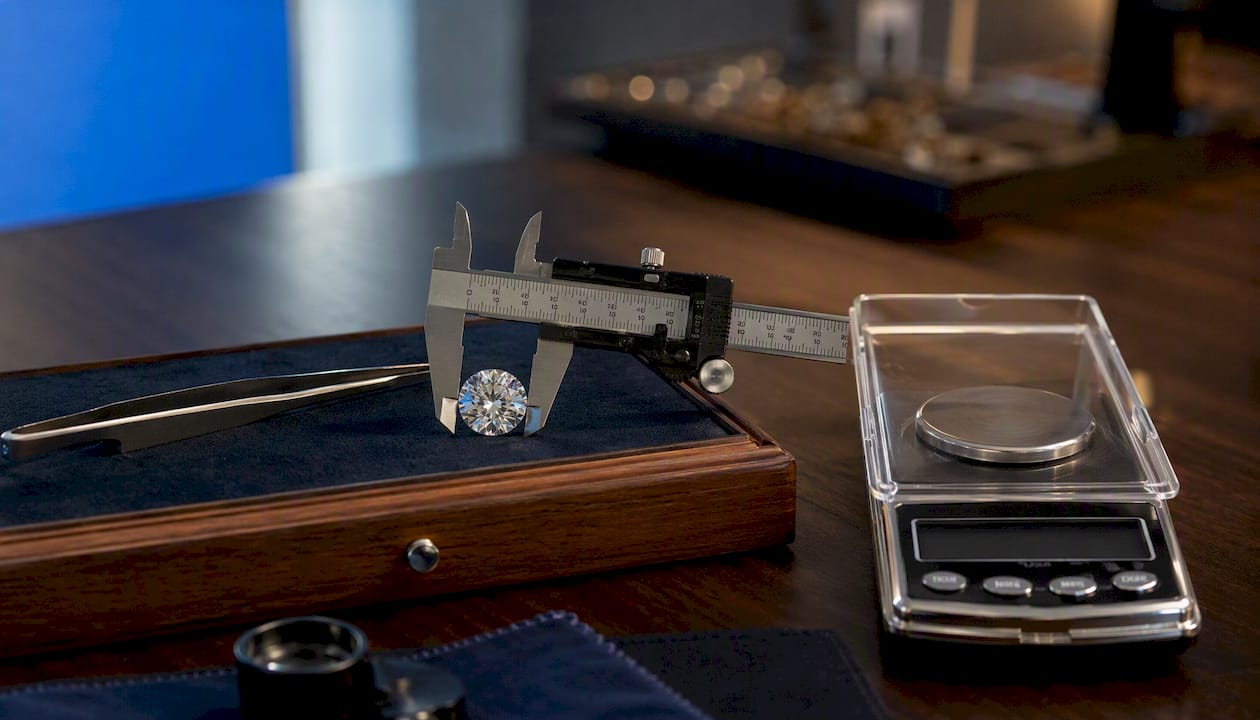
Intake workflow. Photograph the piece at a dedicated intake station (neutral background, scale bar, macro lens for hallmarks). Record weight on a calibrated gram scale, measure stones with calipers, link the lab report, issue a temporary custody memo, enter the record in BoxAlong™, and trigger an immediate backup. The whole intake should take under 30 minutes per piece.
Update triggers. A record change is required after: repair or resize, stone reset, loan out, return from loan, sale, inheritance transfer, insurance revaluation, and appraisal refresh. Each event gets a timestamped entry with the responsible custodian's digital sign-off.
Audit cadence. Best-practice audit schedules call for daily custody sign-offs, quarterly cycle reviews of all active holdings, and a full reconciliation annually. Appraisal values for insurance purposes should be refreshed every 3–5 years, or sooner when precious metal spot prices or diamond market conditions shift materially.
Separation of duties is the single most effective control in a jewelry inventory. The person who records a custody change should not be the same person who authorizes it. A two-person digital sign-off on every movement creates an audit trail that holds up in court and in front of an insurer.
Pro Tip: Configure BoxAlong™ role permissions so that custody transfers require approval from a second named user. This one setting eliminates the most common source of recordkeeping gaps in family office jewelry holdings.
How do you choose a qualified appraiser?
Credential and compliance checks come first. For IRS purposes, a "qualified appraiser" must meet the definition under Treasury Regulation 1.170A-17: relevant education and experience, no prohibited relationship to the donor or donee, and compliance with USPAP appraisal standards. Relevant credentials include GG (Graduate Gemologist, GIA), CGA, MGA, or membership in the Appraisers Association of America.
A defensible appraisal report must contain:
- Effective date of value
- Clear statement of value definition (replacement, FMV, or liquidation)
- Methodology used (cost, market data, or income approach)
- Comparable sales or market data supporting the conclusion
- Detailed description of the piece (metal, stones, weight, condition, hallmarks)
- Photographs
- Appraiser's credentials, signature, and statement of independence
On fees: qualified appraisers charge hourly or per-piece rates. An appraiser who charges a percentage of the appraised value has a conflict of interest and does not meet USPAP standards. A second opinion is appropriate for any piece valued above your estate's materiality threshold, or when the first report lacks documented comparables.
Pro Tip: Ask every appraiser candidate for a sample redacted report before engaging them. A report without documented comparables or a clear value definition is not defensible for IRS or insurance purposes, regardless of the appraiser's credentials.
How should you insure, store, and move family jewelry?
Insurance. A scheduled personal articles policy lists each piece by description and agreed value. It covers mysterious disappearance, accidental loss, and worldwide travel — coverage a standard homeowner's blanket policy typically excludes or caps. For heirlooms above $5,000 in replacement value, a scheduled policy is the correct choice. Blanket coverage is acceptable only for lower-value costume pieces where individual scheduling costs exceed the risk.
Custody and storage. Bank safe deposit boxes provide fire and theft protection but limit access hours. Private vaulting services offer climate control, 24-hour access, and institutional-grade security. A home safe is acceptable for pieces in regular use, provided it carries a UL-rated burglary rating and is bolted to the structure. High-value transport requires dual custody (two authorized persons present), an insured courier with adult signature confirmation, and a custody memo issued before departure and closed on receipt.

Pro Tip: Store highly sentimental pieces separately from the main collection and maintain a limited-access list in BoxAlong™. Fewer people knowing the location of a specific piece is a meaningful security control.
How do you protect provenance and pass jewelry to heirs?
Succession planning for jewelry is a governance problem as much as a legal one. The records you keep today determine how cleanly assets transfer and whether heirs understand what they are receiving.
- Keep original receipts, lab reports, photos, and personal notes together — in a single linked record. Update the record after any alteration and note the rationale.
Governance rules should specify: who may authorize appraisals, who can remove items from custody, approval thresholds for sales, and the reporting cadence to family governance bodies. Documented origin records and secure digital backups are the practical foundation for all of this.
Pro Tip: Include a short provenance note in every estate document that references a piece by its BoxAlong™ asset ID and GIA/AGS report number. Language like "the diamond solitaire ring bearing GIA Report No. XXXXXXXX, recorded as Asset ID BX-0042" removes ambiguity entirely.
How do BoxAlong™ and Familigi™ support the full checklist?
GCA-FopFo's BoxAlong™ and Familigi™ applications map directly to the operational requirements above.
| Checklist item | BoxAlong™ / Familigi™ support |
|---|---|
| Asset ID serialization | Auto-generated unique IDs at record creation |
| Photo and document storage | Secure file attachments per asset record |
| Appraisal linkage | Valuation records with type tags (FMV / replacement) |
| Custody logs | Timestamped custody entries with dual sign-off |
| Access controls | Role-based permissions per user and asset |
| Audit trails | Immutable change log for every record update |
| Valuation tagging | FMV vs. replacement flags for reporting and compliance |
| Family tree linkage | Familigi™ connects ownership history to named family members |
Implementation steps:
- Migrate existing records (spreadsheets, paper files) into BoxAlong™ using the asset taxonomy setup guide.
- Assign custodial roles and configure two-person approval for custody transfers.
- Tag each record with the correct valuation type and set calendar reminders for appraisal refresh cycles.
- Connect Currencida™ for multi-currency valuation tracking when holdings span international acquisitions.
- Use SEBAA™ to document bequests, beneficiary designations, and benefit allocations tied to specific assets.
- Schedule a 90-day checkpoint to reconcile all records against physical holdings.
How do you document jewelry loans and external displays?
When a piece leaves your custody for a museum loan, exhibition, or private loan to a family member, the record requirements increase rather than decrease.
Before any loan, issue a formal loan agreement that specifies the borrower, purpose, duration, insured value, and return conditions. Create a custody memo in BoxAlong™ with the loan start date, borrower's name, and the piece's condition at departure (supported by fresh photographs). The borrower's insurance certificate should be attached to the record before the piece moves.
During the loan period, schedule check-in entries at agreed intervals. On return, conduct a condition review against the departure photographs, update the custody log with the return date and condition note, and close the loan record. Any damage discovered on return triggers an immediate appraisal update and an insurance notification.
For exhibition loans to institutions, require the venue's fine arts insurance certificate and confirm the piece is listed by name and value on their policy. Transport must use an insured courier with adult signature, and a representative should be present at installation and de-installation.
Why do family members and advisors need regular inventory training?
A well-built inventory degrades quickly when the people using it do not understand the protocols. New family members, successor trustees, and incoming advisors all need a structured orientation before they touch any record or handle any piece.
A practical training program covers three areas. First, record-keeping procedures: how to create an intake record, what photographs are required, and how to log a custody change in BoxAlong™. Second, valuation literacy: the difference between replacement and FMV, when to commission a new appraisal, and why the valuation type on a record matters for tax and insurance decisions. Third, custody protocols: who is authorized to move a piece, what a custody memo looks like, and what to do if a piece cannot be located.
Schedule a brief annual review for all active users of the system. When a significant event occurs (a death in the family, a major acquisition, or a policy renewal), a targeted refresher is more effective than waiting for the annual cycle. Keeping a short written protocol document in BoxAlong™ as an attached reference gives any advisor an immediate answer without needing to call the family office.
Key Takeaways
Defensible jewelry inventory management requires serialized records, correct valuation types, secure custody controls, and a consistent appraisal cadence tied to your estate and insurance obligations.
| Point | Details |
|---|---|
| Serialize every piece | Assign a unique BoxAlong™ asset ID at intake and link it to the lab report number. |
| Match valuation to purpose | Use replacement value for insurance; use FMV for IRS Form 706 and estate filings. |
| Maintain custody audit trails | Log every movement with a timestamped, dual sign-off entry in your digital record. |
| Refresh appraisals on schedule | Review replacement values every 3–5 years and FMV appraisals before any estate event. |
| GCA-FopFo BoxAlong™ + Familigi™ | Maps directly to serialization, valuation tagging, custody logs, and succession recordkeeping. |
Why documentation preserves more than price
The families who navigate estate transitions most cleanly are not the ones with the most valuable jewelry. They are the ones with the best records. A GIA report number, a dated photograph, a signed custody memo, and a clear ownership note cost almost nothing to create. At the moment of a contested estate, an insurance claim, or a sale to a serious buyer, those documents are the difference between a smooth transfer and months of friction.
The conventional wisdom treats jewelry appraisals as a one-time insurance formality. The more accurate view is that appraisals are periodic snapshots in a living record, and the record itself is the asset. A piece with full provenance, documented condition history, and a clear ownership chain commands better outcomes at every transition point: higher insurance recovery, lower estate dispute risk, and stronger resale positioning. The platform you use to hold those records should treat them with the same seriousness as any other financial holding in your family office.
Your next step with Full Option Family Office
Your jewelry holdings deserve the same rigor as any other asset class in your portfolio. GCA-FopFo gives your family office a single, secure platform where BoxAlong™ handles asset serialization, valuation tagging, custody logs, and audit trails, while Familigi™ connects each piece to the family members who own, inherit, or steward it.

Licensing BoxAlong™ and Familigi™ together gives you the full jewelry inventory workflow from day one: data migration support, asset taxonomy setup, and a 90-day onboarding checkpoint to confirm your records are complete and your custody controls are live. Currencida™ and SEBAA™ extend that coverage to multi-currency valuations and beneficiary designations when you are ready.
Visit the GCA-FopFo platform to license the suite, schedule an onboarding review, or speak with the team about migrating your existing records. Your first 90-day checkpoint starts the day you sign in.
Authoritative references for advisors
- VALUATION OF GEMS AND JEWELRY — (Appraisers Association of America / USPAP) — the governing standard for appraisal methodology, required report contents, and credential expectations. Use when selecting an appraiser or reviewing a report for IRS compliance.
- Heirloom Jewelry Records: Origin & Value — (ORIGIN / De Beers Group) — practical guidance on lab inscriptions, digital records, and ownership documentation for provenance preservation across generations.
- Jewelry Inventory Management — (WJewel) — operational best practices for serialization, attribute tracking, and real-time record maintenance.
- Jewelry Inventory Audit Best Practices — (WJewel) — recommended audit cadence (daily, quarterly, annual) and custody controls including RFID and separation of duties.
- Family Heirloom Valuation — (SkyJems) — explains FMV, replacement, and liquidation value categories and the role of provenance in market premiums.
- Valuing Inherited Jewelry (Appraisily) — intake checklist covering photography, weights, hallmarks, and prioritization of which pieces need professional appraisal.
- Estate Jewelry Appraisal Guide — (Jewelry Identifier) — estate appraisal requirements, FMV vs. replacement distinctions, and appraisal cost expectations for budget planning.
This article provides general information about jewelry recordkeeping and valuation practices. It is not legal, tax, or financial advice. Confirm current IRS requirements, appraisal standards, and insurance terms with a qualified appraiser, estate attorney, or licensed insurance professional.