

Inheritance planning data is the full set of documents, account records, and digital access details that determine who inherits what and how smoothly that transfer happens: wills, trusts, beneficiary designations, gifting history, digital keys, and the tax thresholds that shape decisions. If you do one thing this month, do this: complete a single document and beneficiary audit, then consolidate the results into one secure inventory your family and advisors can actually use.
TL;DR:
- Beneficiary designation mismatches are common, so regular cross-checks against the will prevent outdated or incorrect inheritance payouts.
- Tracking physical, digital, and account data in a secure, organized inventory ensures quick access for executors during crises.
- Public records like probate and estate tax filings undercount wealth transfer because they exclude beneficiary-designated assets that skip probate entirely.
- Using structured data and trust-based arrangements for real estate and staged distributions helps families avoid delays and disputes.
- Centralized platforms like GCA-FopFo enable ongoing management of inheritance information, reducing risks from scattered, outdated records.
Table of Contents
- What Does Inheritance Planning Data Actually Include?
- Where Does Reliable Inheritance Data Come From?
- How Family Offices Use Structured Data to Avoid Costly Mistakes
- How Do You Collect and Organize Your Inheritance Data?
- What Legal and Privacy Issues Should You Watch For?
- Why Treating Inheritance Planning as Data Governance Matters
- A Consolidated Way to Centralize Your Family's Inheritance Data
- Sources
- FAQ
What Does Inheritance Planning Data Actually Include?
Most families think they have their affairs in order until someone asks for the trust's registration date or the password to a crypto wallet. Inheritance planning data is bigger than a will. It is every record that answers the question, "who gets what, and how do they access it?"
Start with the legal core: your will, any revocable or irrevocable trusts, powers of attorney, and healthcare directives. These documents establish intent, but they rarely tell the whole story on their own.
Next comes account-level data, which is where most families lose track of things. Retirement accounts, life insurance policies, and bank or brokerage accounts each carry their own beneficiary designation, separate from what your will says. A mismatch between a decades-old 401(k) beneficiary form and your current will is one of the most common, and most avoidable, inheritance mistakes.
Then there is everything physical and digital that needs its own paper trail:
- Property records, deeds, and title documentation for real estate
- Appraisal records for high-value collections, art inheritance and estate planning or jewelry
- Digital assets: cryptocurrency private keys, password manager exports, and cloud backup access
- Business ownership agreements and buy-sell provisions, if applicable
Finally, capture the metadata that makes this data usable under pressure: account numbers, the named executor or trustee for each document, and the date each record was last updated. A succession planning data room built around these fields turns a filing cabinet into something an executor can actually work from.
Where Does Reliable Inheritance Data Come From?
No single source gives you the full picture, which is exactly why families and researchers alike have to triangulate.
Probate records and estate tax returns are the most detailed public sources, but they carry a built-in bias: they only capture assets that pass through probate or exceed filing thresholds. Life insurance proceeds, trust-held property, and beneficiary-designated retirement accounts routinely skip probate entirely, so these records systematically undercount the true transfer of wealth. The IRS publishes year-of-death estate tax tables broken out by state and estate size, useful for benchmarking but incomplete on its own.
Two research datasets fill in the gaps for pattern recognition, even if they are not tools for managing your own estate:
- The Health and Retirement Study tracks more than 14,000 deceased participants, linking their estate-planning documents to what actually happened after death.
- The Survey of Consumer Finances is a triennial, oversampled survey researchers use to estimate inheritance flows and model tax-policy effects.
Administrative property and title records fill in housing transfers, particularly where trusts are involved. But the honest answer is that life insurance, trust assets, and beneficiary-designated accounts almost always require direct household collection. No government database tracks who you named on your Fidelity IRA.
How Family Offices Use Structured Data to Avoid Costly Mistakes
Families who treat inheritance data as a governed dataset, rather than a drawer of paperwork, catch problems before they become disputes. The starting point is beneficiary mapping: cross-checking every account's named beneficiary against the will and flagging mismatches early, before a policy pays out to an ex-spouse instead of a current one.
Phased distributions matter too. Research on inheritance windfalls shows many recipients spend down lump-sum inheritances quickly, which is why advisors increasingly favor staged transfers over single payouts. For real estate specifically, trusts are the dominant instrument because they let parents retain control while avoiding probate delays that can leave a family home in limbo for months.
A few practices consistently separate smooth transitions from messy ones:
- Map every beneficiary designation against the will annually, not just at the time of drafting
- Use trusts for real estate to preserve occupancy and skip probate friction
- Consolidate multi-currency, multi-account holdings into one reporting view for executors
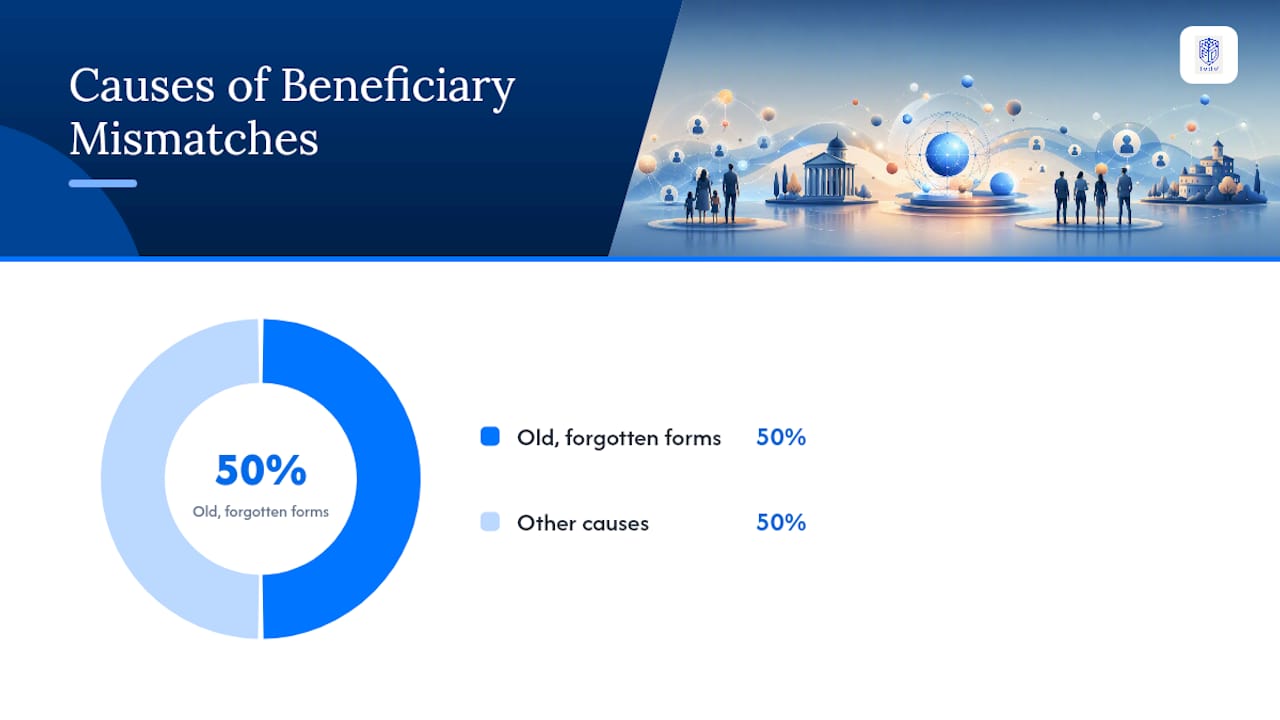
Pro Tip: Run the beneficiary audit before the estate documents get updated, not after. Half the mismatches families find were created by an old form nobody thought to revisit.
Platforms like beneficiary mapping tools built for multi-generational households exist precisely because this cross-checking is tedious to do by hand across a dozen accounts.
How Do You Collect and Organize Your Inheritance Data?
You do not need a law degree to build a usable inheritance dataset. You need a system and a Saturday afternoon to start it.
- Locate and inventory your documents. Gather the will, trusts, powers of attorney, and healthcare directives. Record the date each was signed and who serves as executor or trustee for each one.
- Audit beneficiary designations. Pull the beneficiary forms for every retirement account, life insurance policy, and brokerage account. Flag anything that does not match your current will.
- Catalog digital assets. List password manager access, cryptocurrency wallet instructions, and cloud storage credentials. Fidelity recommends backing up keys separately and documenting fiduciary consent in writing.
- Record your gifting history. Note any gifts made in prior years, since these can affect how much lifetime exemption remains available.
- Choose secure storage and set an update cadence. Decide who can access the inventory, and set a recurring date, annually at minimum, to review it.
- Package an executor readiness brief. Compile emergency contacts, a prioritized action list, and access instructions into one document your advisor and executor both hold.
Pro Tip: Treat step six as the real deliverable. An inventory nobody but you can find is not an inventory. It is a secret.
A data-governance audit run over four to eight weeks is often enough to move a family from scattered files to a working system.
What Legal and Privacy Issues Should You Watch For?
Access rights to digital accounts do not transfer automatically just because you named someone in a will. Keep explicit, signed consent documents for anyone you are authorizing to access digital assets or financial accounts after your death.
On the tax side, the numbers matter more than most people realize. As of 2026, the federal lifetime gift and estate tax exclusion sits at $15,000,000, with a $19,000 annual gift exclusion. State exemptions can be far lower. Oregon, for example, sets its own threshold at just $1,000,000, so a modest estate can trigger state-level tax exposure with no federal liability at all.
Basic security discipline matters here too:
- Encrypt sensitive files and use limited-access credentials for shared inventories
- Keep an audit log of who accessed or updated records, and when
- Call an attorney or tax advisor for complex trusts, cross-border assets, or any estate approaching state exemption thresholds
Why Treating Inheritance Planning as Data Governance Matters
Most inheritance disputes I have seen traced back are not fights over money. They are fights over information nobody wrote down: a beneficiary form nobody updated, a wallet key nobody backed up. A governed dataset, not more legal paperwork, is what actually prevents these failures. Beneficiary mapping tools and a succession data room turn scattered records into something an executor can act on in a crisis. Start your one-page inventory this week. That single document does more good than another year of good intentions.
— GCA
A Consolidated Way to Centralize Your Family's Inheritance Data
Everything covered above, the document inventory, the beneficiary cross-checks, the digital asset list, the gifting history, has to live somewhere your family and advisors can actually reach it. Scattered spreadsheets and a shoebox of paperwork work until the moment someone urgently needs access, which is exactly the wrong time to discover a gap.
GCA-FopFo brings these pieces into one governed space instead of a dozen disconnected files. Familigi™ organizes your family tree and succession structure. BoxAlong™ tracks holdings, property records, and appraisal documentation in one place. Currencida™ keeps multi-currency and crypto accounts, the kind that rarely show up in probate records, visible and current. SEBAA™ manages benefits, payroll, and savings data that feed directly into your executor's readiness brief. The platform is priced with a flat fee rather than a percentage of assets, and you retain full ownership and export rights over everything you store.
If your family's inheritance data currently lives across three banks, a filing cabinet, and someone's memory, the solutions page is the place to see how the four applications work together. Support, updates, and the newsletter run $90 per year per account after setup.
Sources
For deeper research, the IRS estate tax year-of-death tables break down estate size by state. The HRS and SCF datasets, along with Brookings' policy analyses, remain the standard references advisors cite on transfer patterns.
- 2026 gift tax exclusions | Farm Office (Ohio State)
- The Emerging Potential of Longitudinal Empirical Research (HRS) | UC Davis Law Review
- Great wealth transfer analysis and data using SCF | Brookings / TPC (Gale et al.)
- SOI: Estate tax year-of-death tables | IRS
FAQ
What Counts as Inheritance Planning Data?
It includes legal documents like wills and trusts, account-level beneficiary designations, property and appraisal records, digital asset access credentials, and gifting history. The goal is a complete inventory an executor can act on without hunting for missing pieces.
How Often Should You Update Your Inheritance Data?
Review beneficiary designations and document inventories at least once a year, and immediately after major life events like marriage, divorce, a new grandchild, or a large asset purchase. Outdated beneficiary forms are one of the most common causes of unintended distributions.
What Is the Current Federal Estate Tax Exemption?
As of 2026, the federal lifetime gift and estate tax exemption is $15,000,000, with a $19,000 annual gift exclusion. State exemptions vary widely and can be far lower, so check your state's rules separately.
How Do You Handle Disagreements Among Family Members Over Inheritance Data?
Start by making the underlying documents visible to everyone involved rather than letting assumptions stand in for facts. A shared, dated record of what each document says and when it was last updated removes most disputes that stem from outdated information or hearsay.
Does GCA-FopFo Store Inheritance Planning Data?
Yes. The platform's four applications, Familigi™, BoxAlong™, Currencida™, and SEBAA™, are built to centralize family records, holdings, currencies, and benefits in one place. Pricing and features are listed on the solutions page.